
Composite Timber Decking vs Natural Wood in Singapore: A Practical Comparison
Outdoor decking in Singapore faces very different conditions compared to cooler climates. High humidity, frequent rain, and strong sun exposure all year round place constant stress on materials used for balconies, terraces, and gardens.
For homeowners planning an outdoor space, one question comes up consistently:
Is composite timber decking better than natural wood for Singapore homes?
This article compares composite timber decking and natural wood decking specifically in the Singapore context, focusing on durability, maintenance, appearance, and long-term suitability.
Natural Wood Decking in Singapore
Natural wood decking is often chosen for its organic appearance and natural grain variation. Common options in Singapore include teak, chengal, and other hardwoods.
While natural wood can work outdoors, it reacts strongly to Singapore’s tropical environment.
Performance of natural wood in Singapore’s climate
Absorbs moisture from humidity and rain, leading to swelling and warping
Requires regular oiling or sealing to slow down weathering
Colour changes and fading are common under strong sunlight
Prone to mould, rot, and termite activity if not maintained properly
Natural wood decking can be suitable for homeowners who are comfortable with regular upkeep and understand that the appearance will change over time.
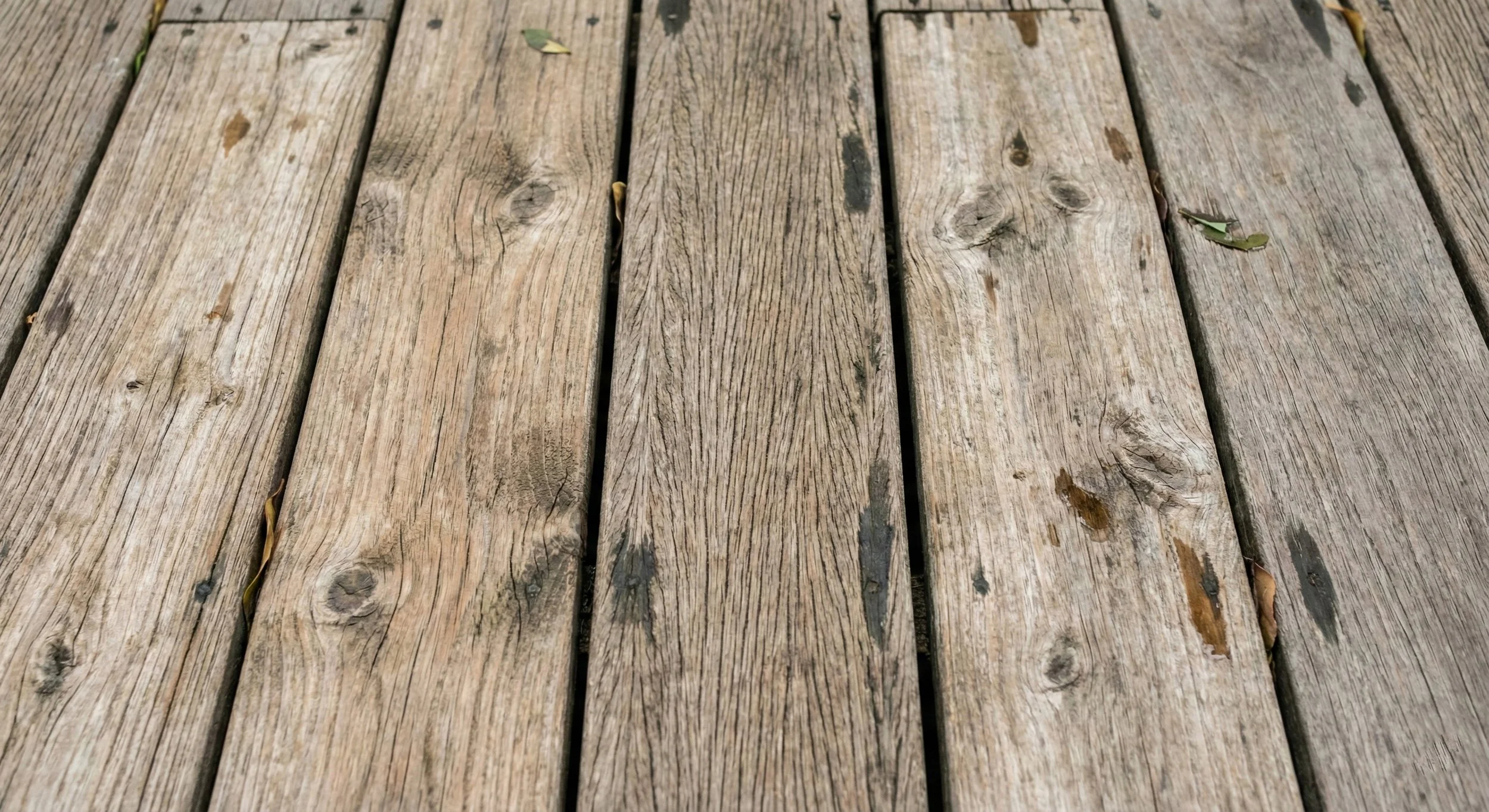
A close-up view of aged natural wood decking boards showing visible cracks, knots, dark moisture stains, and uneven weathering caused by prolonged exposure to outdoor conditions.
What Is Composite Timber Decking?
Composite timber decking is manufactured using a combination of wood fibres and polymers. The material is engineered to reduce the weaknesses of natural wood while retaining a timber-like appearance.
Composite decking is designed specifically for outdoor use, making it particularly suitable for Singapore’s climate.
At Monobo, composite decking is selected for its ability to deliver consistent performance across balconies, terraces, and landed properties.
Composite Timber Decking vs Natural Wood: Key Differences in Singapore
Durability in Tropical Conditions
Singapore’s constant exposure to moisture and heat accelerates wear in outdoor materials.
Composite timber decking:
Resists water absorption
Is less likely to warp or crack
Maintains structural stability over time
Natural wood decking:
Expands and contracts with moisture
Can crack or splinter as it dries
Requires intervention to maintain performance
For long-term outdoor use in Singapore, composite decking generally offers higher durability with fewer issues.
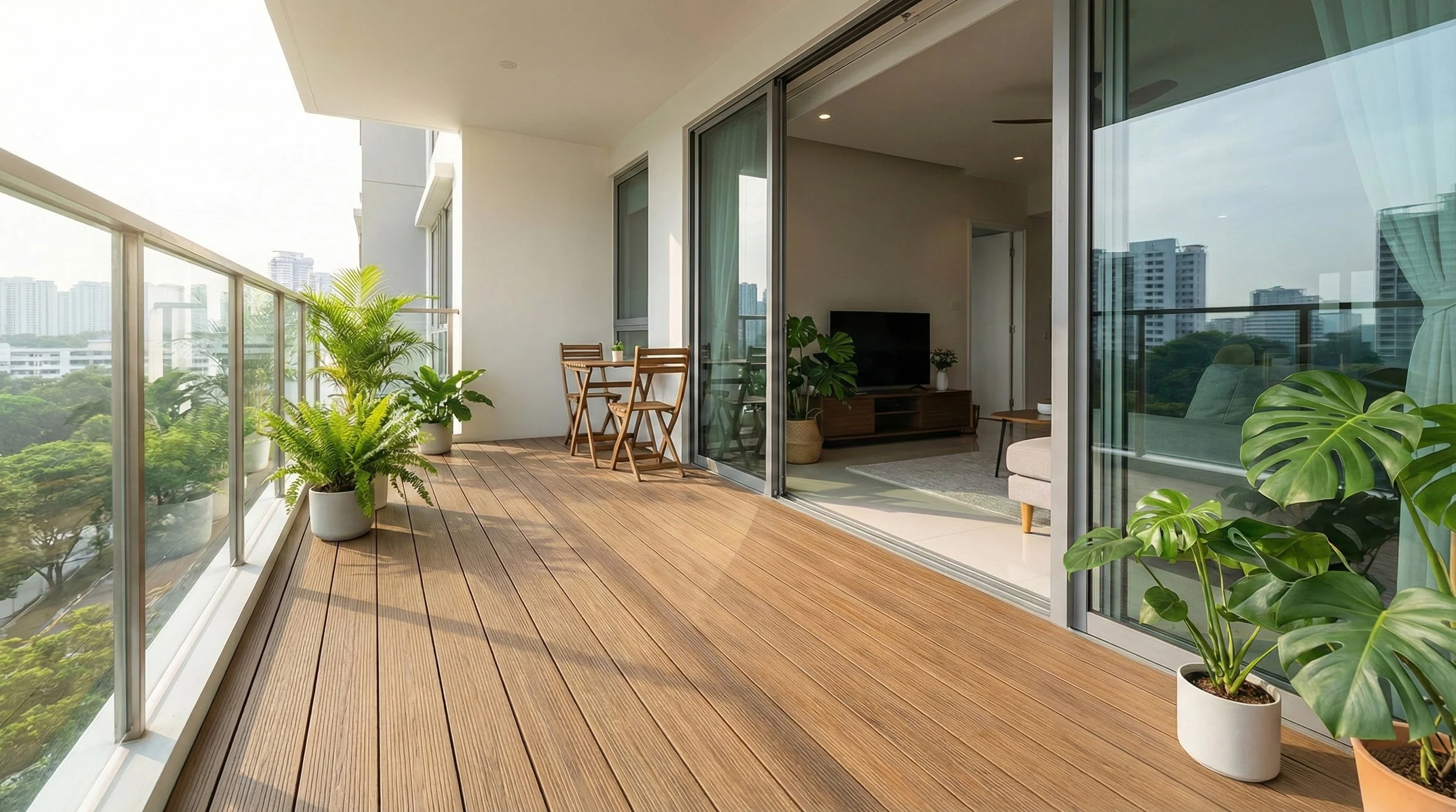
A Singapore condominium balcony featuring composite timber decking in Natural Teak range.
2. Maintenance Requirements
Maintenance is a major consideration for many homeowners.
Natural wood decking typically requires:
Periodic sanding
Regular oiling or sealing
Close monitoring for mould or insect damage
Composite timber decking typically requires:
Basic cleaning with water and mild detergent
No sanding, oiling, or sealing
For condominiums and high-rise balconies in Singapore, composite decking is often preferred due to its low maintenance requirements.
3. Appearance Over Time
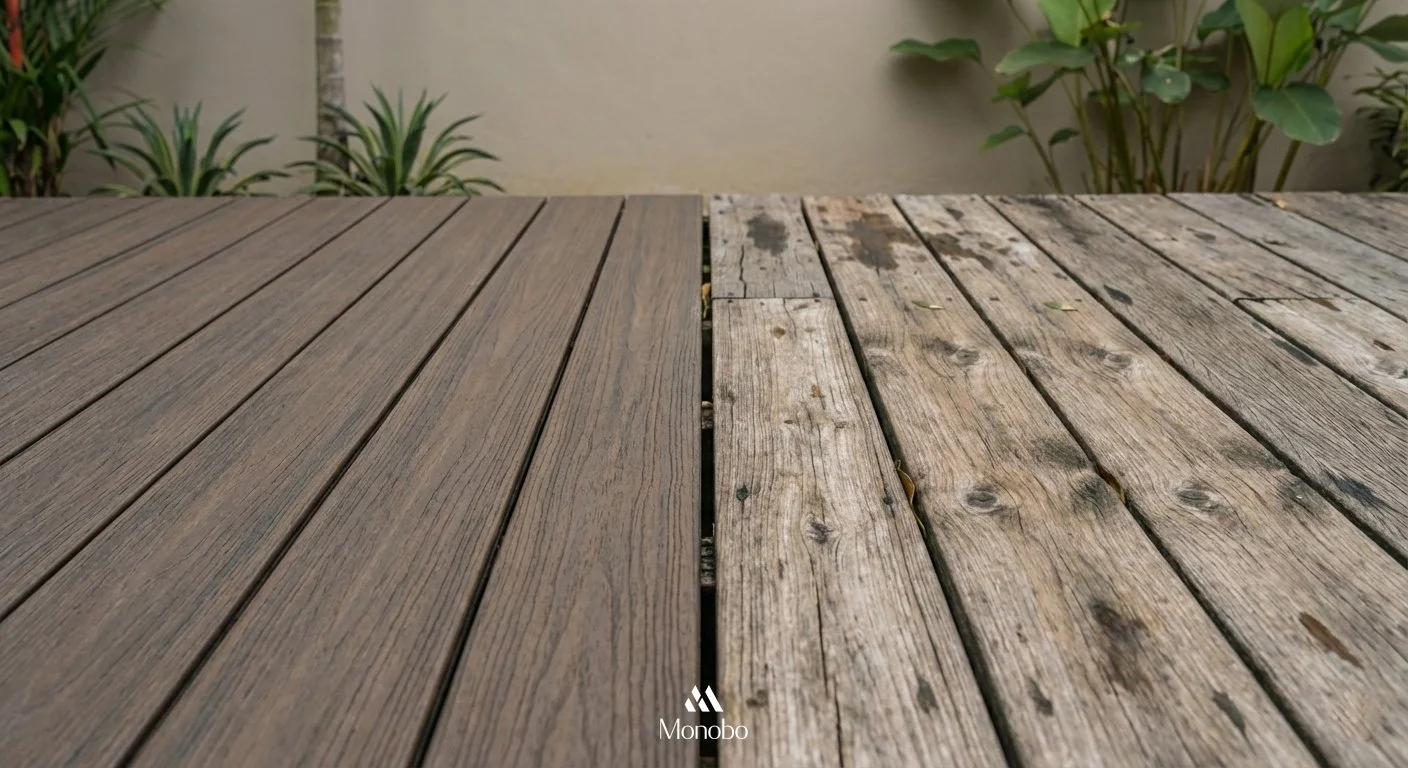
Natural wood changes as it ages. Some homeowners appreciate the weathered look, while others find uneven fading undesirable.
Composite timber decking is designed to:
Retain colour consistency
Fade gradually and evenly
Maintain a uniform surface texture
This makes composite decking easier to integrate with modern architectural designs commonly seen in Singapore homes.
Cost Considerations in Singapore
Initial costs can vary depending on wood species, installation method, and project size.
While natural wood may appear less expensive upfront, long-term costs often include:
Maintenance treatments
Repairs or board replacement
Labour for upkeep
Composite timber decking generally involves a higher initial investment but offers lower ongoing maintenance costs, making it cost-effective over the lifespan of the deck.
Which Option Is Better for Singapore Homes?
There is no one-size-fits-all answer, but the choice depends on priorities.
Natural wood decking may be suitable if:
You prefer organic material variation
You are prepared for regular maintenance
You accept natural ageing and colour changes
Composite timber decking may be suitable if:
You want minimal maintenance
You prioritise durability in Singapore’s climate
You prefer consistent appearance over time
For many homeowners in Singapore, composite timber decking offers a practical balance between appearance, performance, and long-term value.
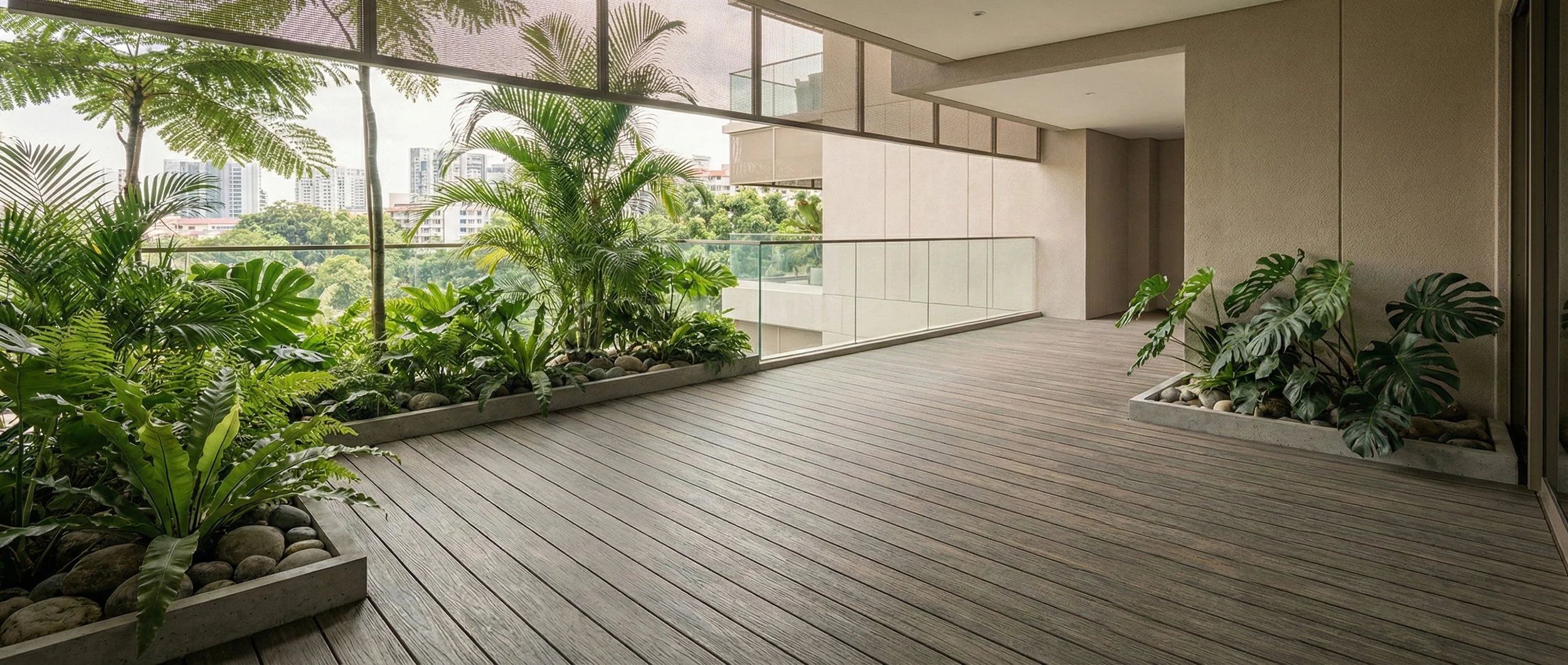
Composite timber decking exudes calmness, and are designed to integrate greenery and architecture - especially in modern Singapore residential settings.
Final Thoughts
Choosing between composite timber decking and natural wood in Singapore comes down to understanding how each material performs under local conditions.
Singapore’s climate places unique demands on outdoor spaces. Selecting a decking material designed to handle heat, humidity, and rain can reduce maintenance effort and improve long-term satisfaction.
If you are planning an outdoor decking project and want advice based on your specific space, speaking with a specialist early can help avoid costly adjustments later.
